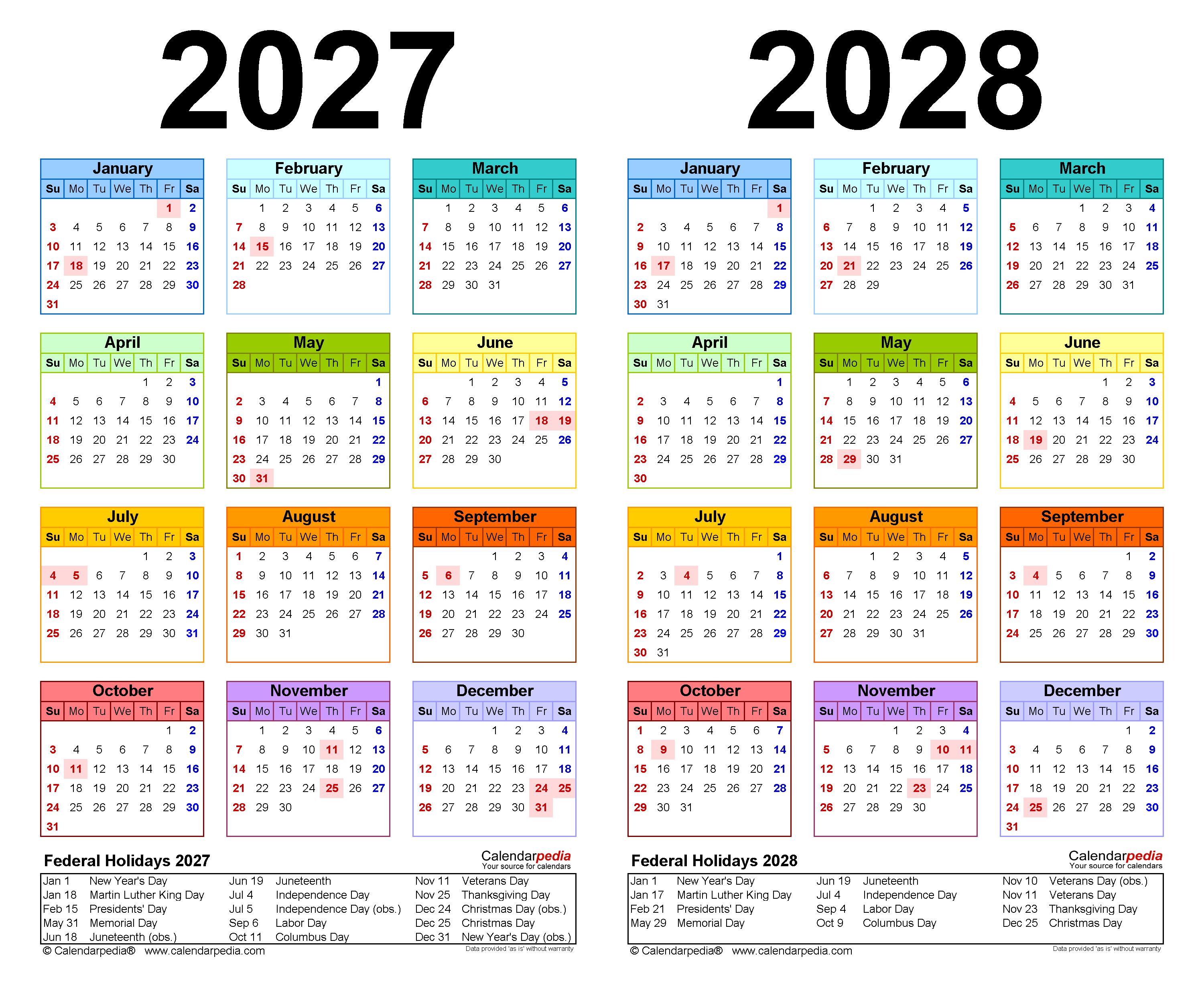
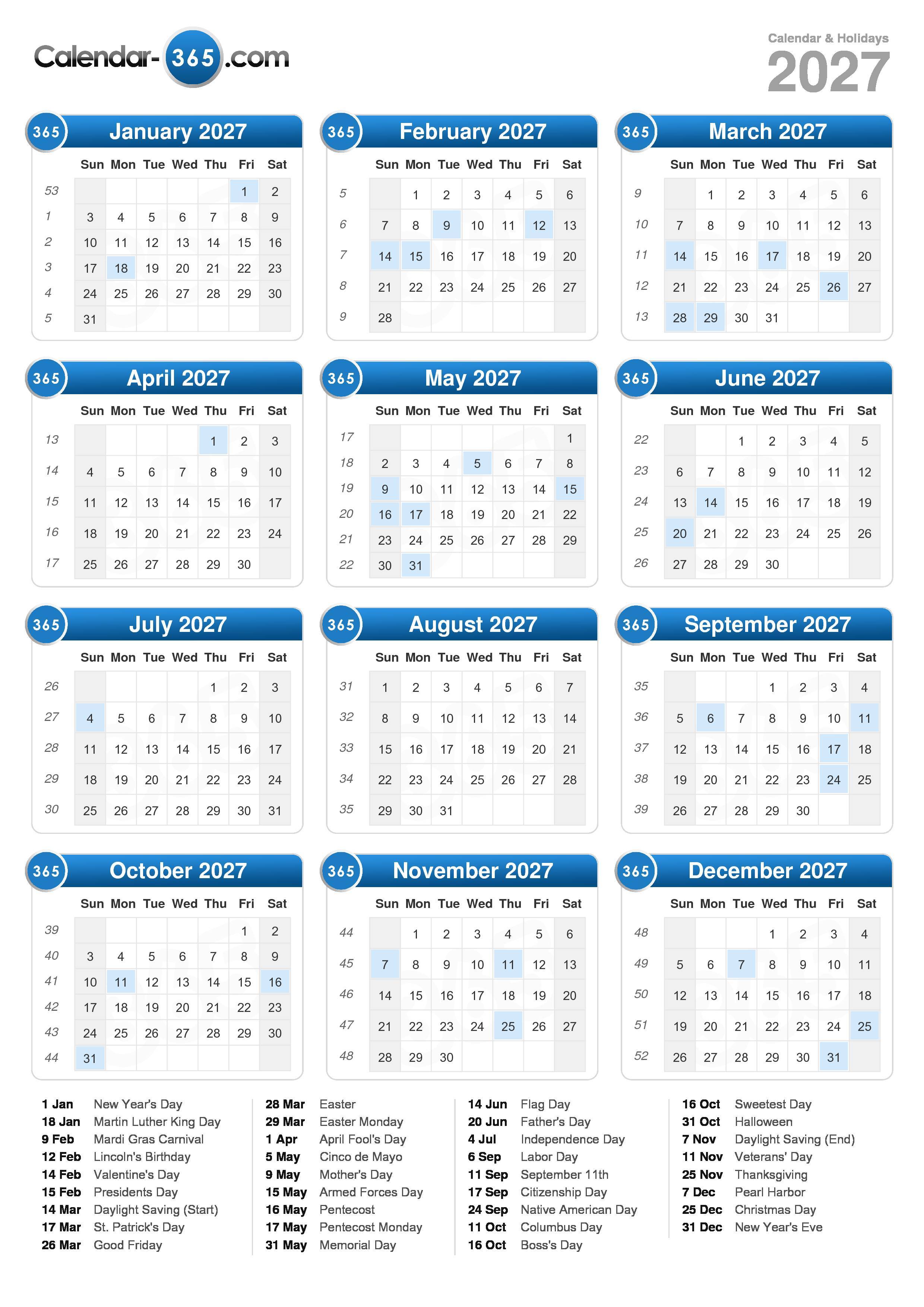
Understanding how calendars repeat can be surprisingly useful for planning events or trips years in advance. Many people wonder which future or past years share the same calendar layout as a specific year, like 2027.
Knowing this can save time when checking dates or scheduling activities. It’s all about how the days of the week align with the dates throughout the year, influenced by leap years and weekdays.
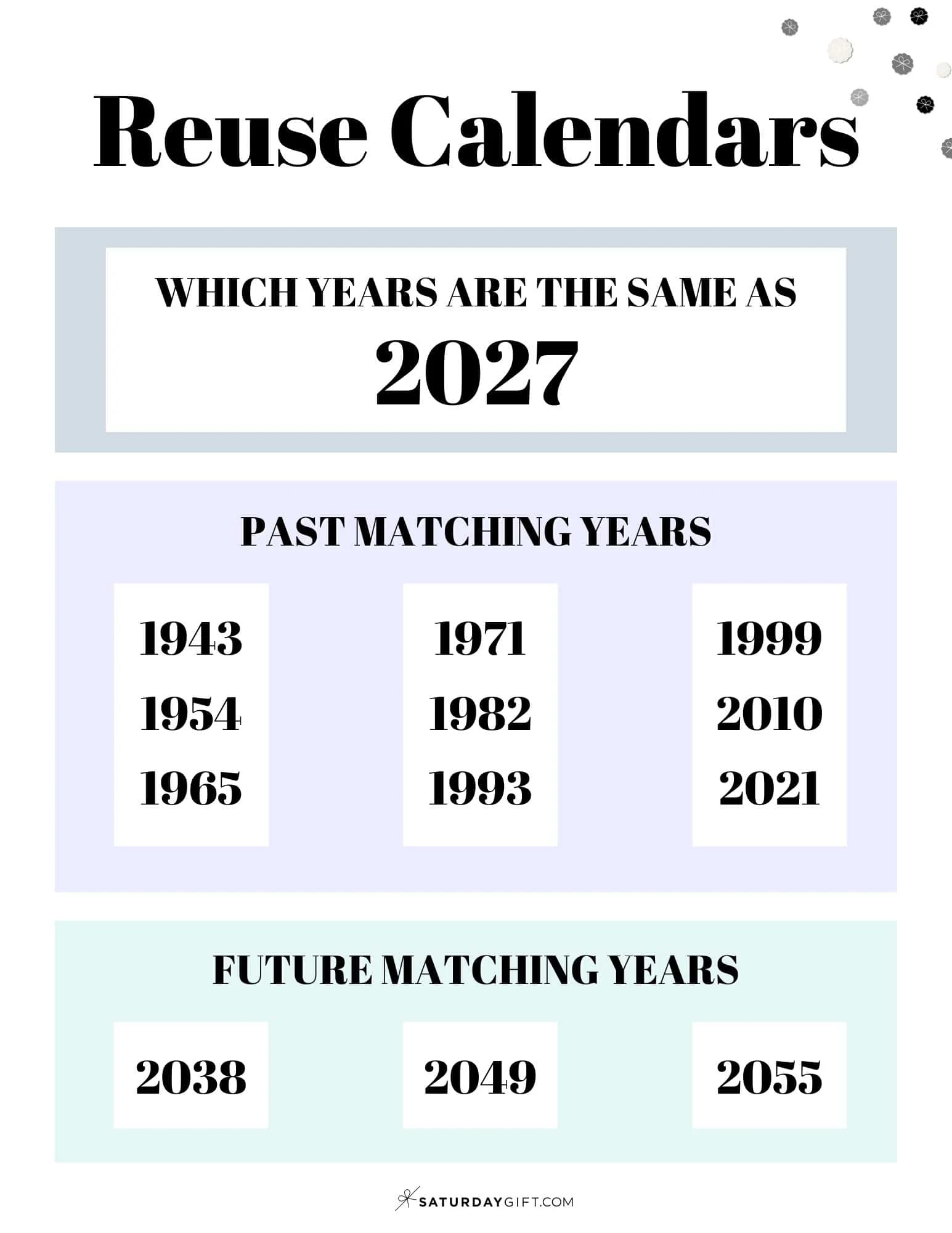
What Calendar Is The Same As 2027?
The calendar for 2027 will be exactly the same as the calendar for 2011. Both years start on a Friday and are common years, meaning they have 365 days without a leap day.
This happens because the day of the week shifts by one each year, except after leap years when it shifts by two. Since 2011 and 2027 share these conditions, their calendars match perfectly.
So, if you have an old planner from 2011, you can reuse it for 2027 without any confusion. This is a handy trick for those who like to keep things simple and organized.
Why Do Calendars Repeat Like This?
Calendars repeat due to the way weeks and leap years interact over time. A common year has 365 days, which is exactly 52 weeks plus one day, causing the next year to start one weekday later.
Leap years add an extra day in February, shifting the calendar further. This cycle creates patterns where certain years share identical calendars, usually every 6, 11, or 28 years depending on leap year placement.
Understanding these patterns helps with long-term planning and can even make historical date research easier. It’s a neat way to see how time cycles through familiar rhythms.
Knowing which years share calendars with 2027 can simplify your scheduling and planning efforts. It’s a small detail that makes managing dates less stressful and more efficient in everyday life.